
The Enterprise AI Transformation Playbook: Adoption, Literacy, & Integration
Artificial Intelligence (AI) has completed its transition from an experimental playground into a core operational utility for Western enterprises. According to recent research from McKinsey, PwC, Gartner, and Accenture, the global business landscape is undergoing a structural realignment. However, a significant gap—the "AI Adoption Divide"—has emerged. While 88% of corporations have adopted AI tools, only 6% are successfully translating this adoption into significant, scaled financial value.
In this climate, companies are shifting focus from simple task automation to Agentic Process-Level Reinvention. Bypassing this divide requires building organizational AI Literacy, restructuring recruiting workflows around live interactive audits, and following rigorous data/security engineering checklists. This playbook provides a comprehensive, data-driven analysis of global enterprise AI adoption, workforce changes, operational use cases, and how TechAuditPros serves as the ultimate partner to bridge the AI integration gap.
Key Report Takeaway
Integrating cognitive AI agents and establishing clear upskilling tracks can reduce operational costs by up to 60% and improve development velocity by 70%. Bypassing the productivity trap requires deep codebase audits and structural validation pipelines.
Table of Contents
- 1. Global Enterprise AI Adoption Rates (2025–2026)
- 2. Influence of AI on Key Business Functions
- 3. The Demand for AI Literacy & AI Knowledge
- 4. The 2026 AI Skills Matrix
- 5. The AI Adoption Divide & Competitiveness
- 6. Labor Market Dynamics (Salaries, Scarcity, Speed)
- 7. Primary Benefits of AI Workflow Integration
- 8. Top B2B Use Cases for AI Integration
- 9. Real Enterprise Case Studies
- 10. Technical Checklists for Enterprise AI Deployment
- 11. Why TechAuditPros is the Ultimate Scope for AI Quality and Developer Auditing
1. Global Enterprise AI Adoption Rates (2025–2026)
Analysis of recent reports from McKinsey, PwC, Gartner, and Accenture reveals a massive surge in AI adoption, transitioning from a novelty to a standard operational utility. According to McKinsey's State of AI, 88% of organizations report regularly using AI in at least one business function (up from 72% in 2024), and 79% have adopted Generative AI (GenAI) specifically.
However, a significant gap remains between pilot experimentation and scaled enterprise implementation. Only about **33% to 38%** of organizations have successfully scaled AI across the enterprise, leaving the remainder stuck in "pilot purgatory" or localized experimentation. Furthermore, only a small cohort of "AI high performers" (estimated between 5% and 12%) report achieving substantial financial return (such as a 5%+ EBIT contribution) from their AI investments.

Figure 1: High-Performance Developer Workstation Optimized with AI Code Assistants
2. Influence of AI on Key Business Functions
AI is driving structural changes across all major enterprise departments, leading to notable productivity shifts:
- Software Engineering: Roughly **84% of developers** currently use coding assistants like GitHub Copilot or Cursor. By the end of 2026, approximately **41% of all production code** is projected to be AI-generated, accelerating code creation but shifting the bottleneck to code review and QA validation.
- Marketing & SEO: Marketing has the highest adoption rate of GenAI within enterprises at **78%**. Traditional search engine volume is projected to drop by **25% by the end of 2026** as users transition to AI-synthesized answer engines (e.g., Google AI Overviews, SearchGPT, Perplexity), forcing marketers to pivot to GEO.
- Customer Support: The GenAI customer service market is projected to grow to **$15.12 billion in 2026**, with cognitive agents resolving up to **96% of simple customer queries** without human intervention.
- Business Operations: Within organizations utilizing AI, **63% report revenue increases** and **56% report cost decreases** in business operations, driven by transitions to autonomous agentic workflows.
3. The Demand for AI Literacy & AI Knowledge
As AI tools democratize, companies face a critical baseline competency shift. To manage this shift, organizations differentiate between **AI Knowledge** (understanding theoretical architectures and algorithms) and **AI Literacy** (the practical capability to utilize and govern AI systems effectively and ethically).
Modern companies must prioritize AI-literate talent to prevent data leakage (such as feeding corporate IP into public LLMs), ensure compliance with frameworks like the EU AI Act, and enable seamless collaboration between business units and software development teams. AI literacy has evolved from a niche specialty into a foundational skill comparable to basic internet literacy in the late 1990s.

Figure 2: Cross-Functional Team Collaborating on AI System Scoping and whiteboarding
4. The 2026 AI Skills Matrix
In 2026, corporate AI skills are categorized into three levels of maturity:
- Foundational / Literacy (All Workers): Basic prompting, conversational refinement, avoiding bias, and identifying hallucination markers.
- Intermediate / Applier (Super-Users & PMs): Chain-of-Thought (CoT) prompting, using low-code integration tools (e.g., n8n, Zapier), and basic Python API execution.
- Advanced / Builder (Engineers & Architects): Multi-step prompt chaining, orchestration frameworks (LangGraph, LlamaIndex), advanced RAG chunking, and Model Context Protocol (MCP) server development.
5. The AI Adoption Divide & Competitiveness
The gap between simple AI *adoption* and *value realization* is widening. McKinsey's research shows that while **88% of corporations** report using AI, only **6%** are high performers driving significant EBIT growth. The remainder are stuck in the "Productivity Trap"—using AI strictly for minor, task-level speed gains (such as drafting emails or writing basic code).
Because these simple task-level gains are easily matched by competitors, any savings are quickly competed away. Sustainable competitive advantage belongs to firms that pursue **AI-powered reinvention**, reorganizing entire business units around autonomous agentic workflows and deploying pre-trained technical teams to scale operational capacity.
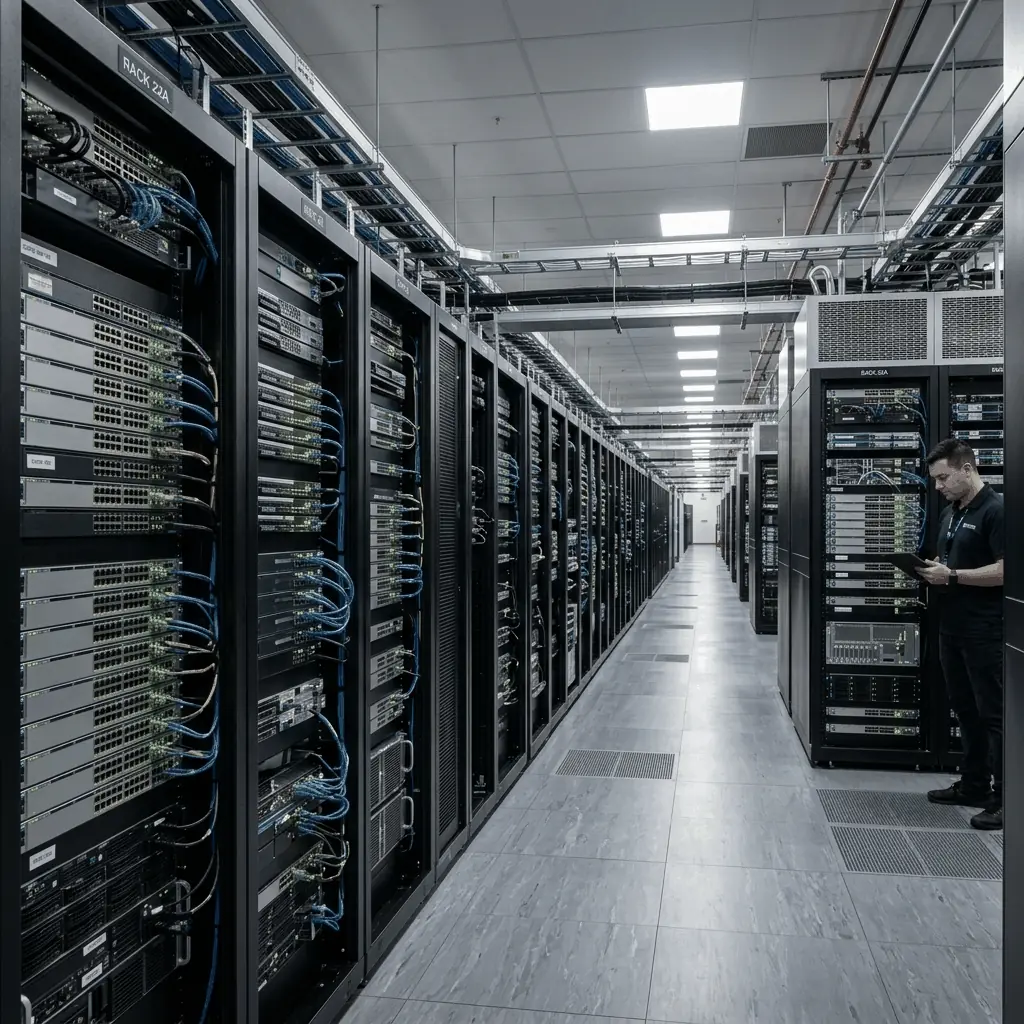
Figure 3: Modern Data Center Infrastructure Powering Scaled AI Agentic Workloads
6. Labor Market Dynamics (Salaries, Scarcity, Speed)
The scarcity of qualified talent has created unique market dynamics. According to PwC's Global AI Jobs Barometer, postings for jobs requiring AI skills are growing **8 times faster** than the broader job market. Job listings requiring AI skills command an average global **wage premium of 62%** (jumping to **118%** in consumer markets).
At the same time, ManpowerGroup reports that **72% of employers** struggle to fill open roles, with AI model development and AI literacy ranking as the two hardest-to-find skills globally. While AI recruiting tools have reduced hiring times by up to 75%, they have created an "Assessment Paradox" where AI-assisted resumes look perfect, making it harder for HR departments to verify actual development skills without live technical code audits.
7. Primary Benefits of AI Workflow Integration
Integrating AI into corporate systems changes business dynamics across four core areas:
- Automation: Shifting from linear, rule-based RPA scripts (which break on minor layout modifications) to autonomous, goal-seeking agents that handle edge cases.
- Accuracy: Deploying Retrieval-Augmented Generation (RAG) and structured output layers (JSON Schema, Pydantic) to eliminate human transcription and data entry errors.
- Scalability: Utilizing elastic, containerized cloud computing resources to scale operational capacity instantly during traffic spikes.
- Predictive Insights: Analyzing real-time data streams to forecast anomalies, cash flow changes, and supply chain bottlenecks, auto-triggering mitigation workflows.

Figure 4: Code Auditing and Technical Due Diligence Security Scanning
8. Top B2B Use Cases for AI Integration
Key operational use cases for enterprise AI deployment include:
- Software Development: Context-aware code generation in Cursor/Copilot, auto-healing Playwright/Cypress test suites, and legacy codebase migrations using AST parsing.
- SEO & Marketing: Vector-based semantic clustering, search intent analysis, and GEO/AEO optimization (incorporating structured data schemas and direct TL;DR answer paragraphs).
- Customer Service: Cognitive agents connected to live APIs via function calling, and automated zero-shot email routing with sentiment escalation triggers.
- Back-Office: Intelligent Document Processing (IDP) combining OCR with layout-aware LLMs to process invoices, match POs, and execute automated ERP accounting writes.
9. Real Enterprise Case Studies
Multiple corporations have documented significant returns from scaled AI:
- Klarna: Automated **2.3 million conversations** in month 1 (equivalent to the workload of 700+ agents), saving **$60 million annually** and cutting resolution times from 11 to 2 minutes.
- Morgan Stanley: Built an internal wealth advisor assistant using OpenAI's GPT-4, increasing information search success from **20% to 80%** across 100,000+ documents.
- Duolingo: Integrated GitHub Copilot Enterprise, resulting in a **25% increase in developer onboarding speed** and a **67% decrease in code review turnaround times**.
- JPMorgan Chase: Developed **COiN** to review commercial loan contracts, saving **360,000 hours of manual legal review** annually with an 80% reduction in errors.

Figure 5: Metric Tracking Dashboard Monitoring AI System Accuracy and Latency
10. Technical Checklists for Enterprise AI Deployment
To ensure a safe deployment, technical managers must execute the following readiness checks:
1. AI Readiness Check: Ensure data sources are clean and accessible; establish Role-Based Access Control (RBAC) so the AI only retrieves data the requesting user is cleared to see; sign Data Processing Agreements (DPA) verifying no vendor trains models on corporate data.
2. Integration Roadmap: Prototype using small datasets; set up secure vector databases (e.g., Pinecone, pgvector) with hybrid search capabilities; build strict exception paths routing failed validations to human review.
3. Go-Live Gate: Run a test suite of at least 500 ground-truth scenarios achieving >= 95% accuracy; conduct adversarial prompt injection pentesting; deploy PII masking filters (e.g. Microsoft Presidio) to scrub customer data before sending to APIs.
11. Why TechAuditPros is the Ultimate Scope for AI Quality and Developer Auditing
As companies race to integrate AI, code complexity and architectural security risks escalate. A major hurdle for CEOs, CTOs, and private equity firms conducting technical due diligence is validating the quality of AI-generated codebases, the robustness of RAG architectures, and the competency of their engineering teams.
TechAuditPros serves as the premier B2B partner to bridge this gap:
- AI Codebase Auditing: Since AI-assisted tools accelerate code generation, they often introduce hidden bugs, security vulnerabilities, or inefficient loops. TechAuditPros performs code audits, analyzing static dependencies, finding security holes, and ensuring compliance.
- AI Architecture Verification: We audit RAG retrieval chunking strategies, vector database performance, prompt injection vulnerabilities, and API latency, ensuring your AI systems are scalable and secure.
- Technical Due Diligence for M&A: We evaluate target software assets during mergers and acquisitions, detailing technical debt, open-source licensing compliance, and security risks.
- AI Developer Competency Vetting: Bypassing resume bloat requires rigorous assessment. TechAuditPros designs and executes custom **Live Interactive Audits** to vet AI engineers, verifying prompt-chaining skills, error handling, and system design expertise.
To protect your engineering margins and ensure compliance, partner with the world's leading technical code audit firm. Let TechAuditPros audit your system today.