Key Takeaways
- There is no best ERP in India; there is a best fit for size, sector and production method. Lists that rank without asking those three are reseller pages.
- Global tier: SAP S/4HANA, Oracle NetSuite, Microsoft Dynamics 365 for large or multi-country businesses. Mid-market: SAP Business One, Sage X3, Odoo. Open source: ERPNext. Indian-built: a dozen sector products for textiles, pharma, food and engineering.
- For a business under about twenty users with standard processes, the honest answer is often Tally or Zoho plus discipline, not ERP at all.
- Custom earns its place when your process is the reason you are still on spreadsheets and configuration keeps producing workarounds.
The best ERP software in India does not exist, and any page that tells you it does is selling it. What exists is a best fit for three things: your size (users and sites), your sector (a garment exporter, a spice processor and a machine shop need different production layers) and your production method (make to order, make to stock, job work, batch). This article sorts the field the way a buyer should — by who each product is for — and includes the two answers the “top 10” lists leave out: that many businesses do not need ERP yet, and that some need one that does not exist off the shelf.
Sort by Size First
| Your business | Products that fit | Honest note |
|---|---|---|
| Under ~20 users, standard trading or services | TallyPrime, Zoho Books + Inventory, Busy, Marg | Probably not ERP yet. Discipline and a clean chart of accounts beat a system you will not use. |
| 20–100 users, one or two sites, manufacturing or distribution | SAP Business One, Sage X3, Odoo, ERPNext, Indian sector products | The real mid-market. Fit is decided by production method, below. |
| 100+ users, multi-site or multi-country | SAP S/4HANA, Oracle NetSuite, Microsoft Dynamics 365 | Implementation partners matter more than the product. |
| Any size with a genuinely unusual process | Custom, or ERPNext/Odoo heavily extended | Only when configuration keeps producing workarounds. |
The Indian “top 10” pages ranking for this search list Sage X3, SAP Business One, S/4HANA, NetSuite, Dynamics, Odoo, ERPNext and a handful of Indian products (Zyno, Vasy, Udyog and others) in various orders. They are all real; they are not all for you.
Then by Production Method
For a manufacturer this predicts fit better than any feature matrix, and it is the question the lists skip.
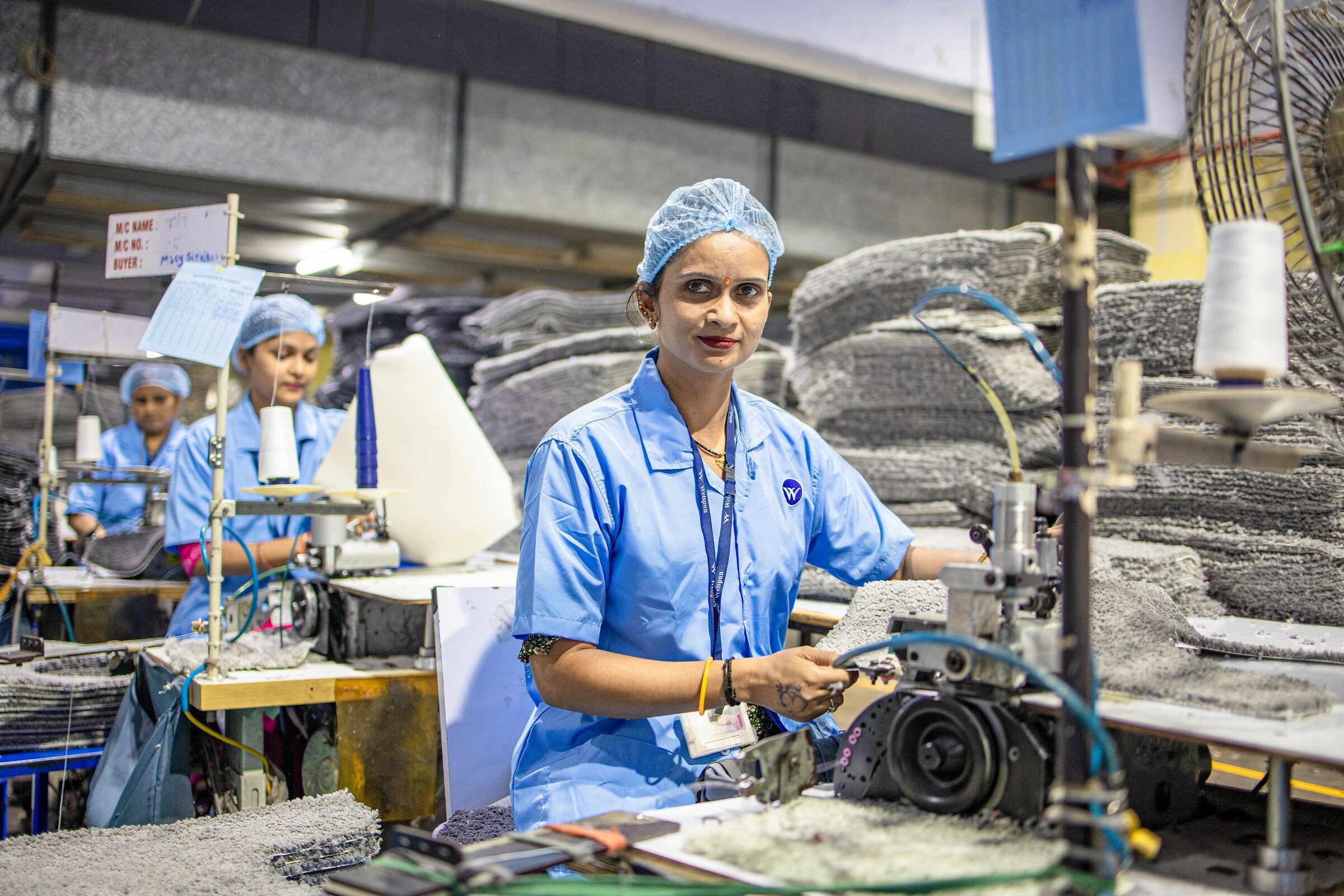
- Make to order / job work (engineering units, garment CMT, printing): every job different, so quoting from a bill of materials, per-job costing and honest promise dates matter most. Job-work and subcontract tracking is the Indian wrinkle — fabric out to a dyeing unit is still your stock.
- Batch / process (spices, food, pharma, chemicals, ayurveda): formulas not BOMs, yields, batch traceability, expiry. Pharma adds regulatory batch records.
- Make to stock (consumer goods, components): forecasting, reorder points, finished-goods visibility across godowns.
- Trading and distribution (the largest group in India): no production layer at all; what matters is multi-godown stock truth, scheme and pricing rules, salesman-wise reporting and e-way bills. Busy and Marg were built for exactly this.
Sector-specific Indian products earn their place here: a garment ERP that understands a size-and-colour matrix, cut-to-pack ratios and CMT job work will fit a Tiruppur unit better than a global product configured for it. We wrote that case in full at garment manufacturing ERP for Indian units.
The Indian Compliance Layer Is Not Optional
Global products are sold by global comparison pages. If you operate in India, these are the tests to run in the demo, with your own data:
- GST: CGST/SGST/IGST splits, HSN at the required digit level, GSTR-ready reporting, reverse charge.
- E-invoicing: IRN generation through the IRP or a GSP, QR codes on invoices, the 2FA requirement in force from April 2026, and error handling when the IRP rejects.
- E-way bills: generated from the despatch, not re-keyed on the portal.
- TDS/TCS at purchase and sale where applicable.
- Integration with the accountant’s book of record — usually Tally — because most Indian CAs will not move.
The thresholds and rates in that list change; we point at the GST portal rather than restating them. What does not change is the test: ask to see an invoice go from despatch to IRN to e-way bill in one flow. Products that pass are Indian-ready; products that need a “localisation partner” are not, whatever the list says.
The Two Answers the Lists Leave Out
Not yet. A twelve-person trading firm with one godown does not need ERP. It needs Tally kept clean, a stock count that is believed, and a spreadsheet nobody edits without telling the owner. Buying a system to impose discipline the business does not have produces a system nobody uses. We say this on calls more often than we say anything else.
Not off the shelf. When the process is the reason you are still on spreadsheets — the odd pricing rule, the subcontract loop, the way your customers order — and every product demo ends with “we can configure that” and then a change request, a system built around the process stops the workarounds. That is what we build for Indian businesses, and the honest test for it is that you have already tried two products and are still on spreadsheets.
Frequently Asked Questions
Which is the best ERP software in India?
None is best for everyone. Under about twenty users with standard processes, Tally, Zoho or Busy plus discipline usually beats ERP. In the mid-market SAP Business One, Sage X3, Odoo, ERPNext and Indian sector products divide up by production method. For large, multi-site groups, SAP S/4HANA, Oracle NetSuite and Microsoft Dynamics 365, where the implementation partner matters more than the product.
What is the best manufacturing ERP in India?
It depends on how you make things. Job-work and make-to-order units need per-job costing and subcontract tracking; batch and process producers need formulas, yields and traceability; make-to-stock needs forecasting. Sector-specific Indian products often fit a garment or pharma unit better than a global product configured for it.
Is ERPNext or Odoo good for Indian businesses?
Both are credible mid-market options with Indian GST localisation and large communities, and both are open source, which removes the per-user trap. Both need a capable implementation partner; the licence is free, the fit is not.
Does an Indian business need ERP or is Tally enough?
Tally is enough for accounting, stock and GST in a stable business with one or two sites and standard processes. It stops being enough when production, job costing, multi-godown stock truth or a storefront that needs live availability enter the picture — and then the question is what sits on top of Tally, not what replaces it.
When should a business build custom ERP instead of buying?
When its process is the reason it is still on spreadsheets, when two product demos have ended in workarounds, or when per-user pricing is growing faster than the business. Not because building is more interesting; for most businesses a product is the right answer and we say so.
Weighing up a system for your own business?
Book a free strategy call. We walk one real order through your business — from enquiry to invoice — and tell you honestly whether Tally plus a spreadsheet, a cloud product or a custom build fits, including when the answer is “not yet”.
Book a Free Strategy Call